Types of crockery and how to care for them
Glass, porcelain, plastic, silver, stainless steel, wood and more – such a wide variety of materials requires the right cleaning and care. Always follow the manufacturer’s instructions for your crockery, the detergent manufacturer’s guidance and the recommendations provided by your appliance manufacturer. Only by combining all three can you ensure your tableware stays looking its best for years to come.
These materials may become discoloured or lose their shine when cleaned in a dishwasher.
Stainless steel is rust-resistant and therefore dishwasher-safe. However, to keep it in the best condition, stainless steel should not be left in contact with chlorides such as table salt for extended periods. Induction-compatible pots and pans are also dishwasher-safe. Brownish, bluish or pearlescent discolouration on stainless steel is completely harmless and can be easily removed with a damp cloth and a little appliance cleaner or citric acid.
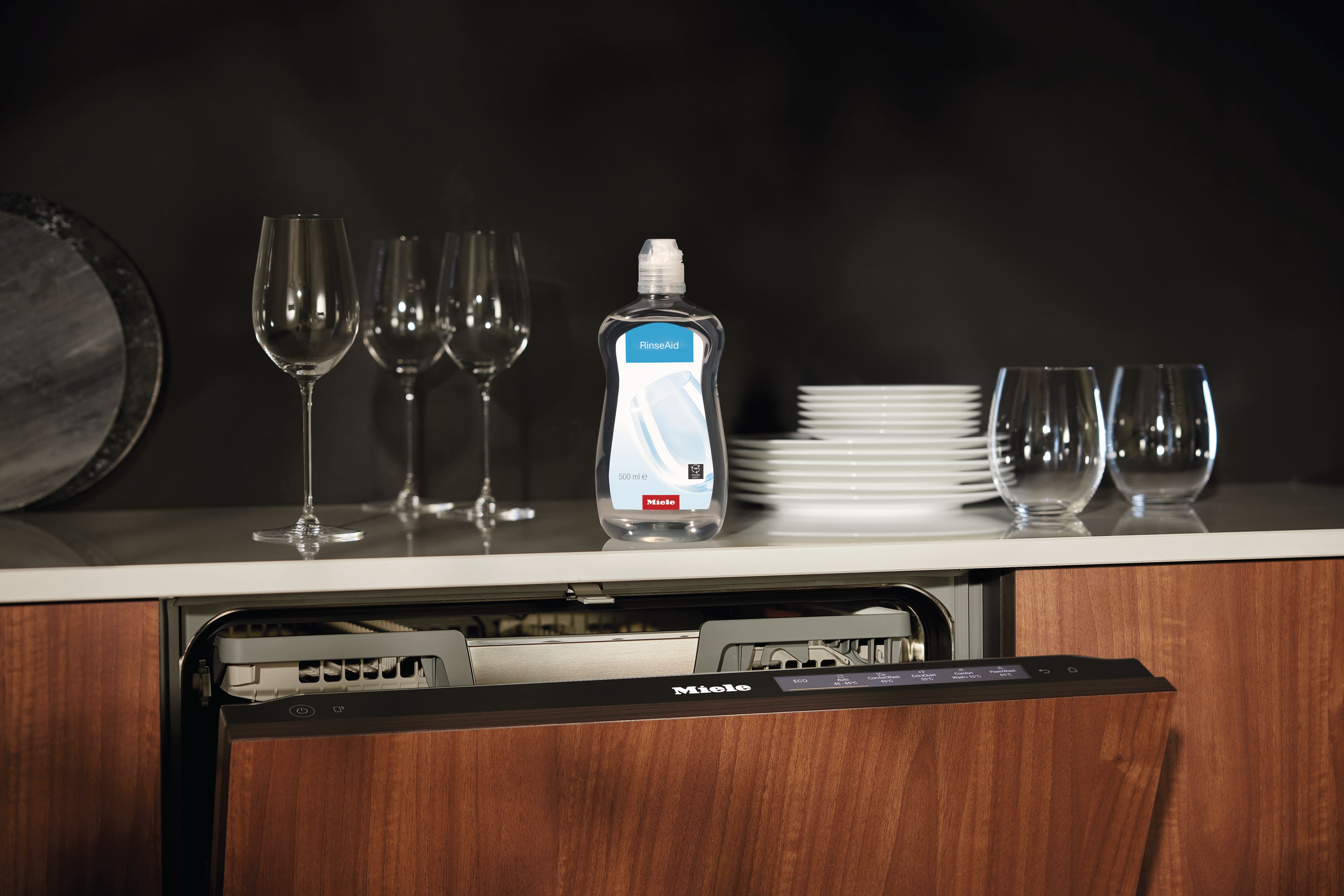
When buying new glassware, look for items labelled “dishwasher-safe”. Glasses carrying this label have been tested for at least 1,500 wash cycles. You should also adjust your dishwasher’s water softener setting to match your local water hardness level, which can be obtained from your water supplier. Even high-quality, thin-walled glasses can be safely cleaned in your Miele dishwasher. For the best results, use a detergent with integrated glass care.
Cutlery and crockery made from wood, or with wooden parts, are not suitable for dishwasher use, as the wood may crack or swell. The adhesives used are also not designed for dishwasher cleaning, which can cause wooden parts to come loose.
Ceramics are mainly made from clay or kaolin, feldspar and quartz. Depending on the grain size, they are classified as either coarse or fine ceramics. Tableware is predominantly made from fine ceramics, which can be divided into four groups: earthenware, stoneware, porcelain and vitreous china.
Plastic items can generally be cleaned in the dishwasher. In particular, thermosetting plastics are fully dishwasher-safe, while thermoplastics are suitable for temperatures up to 50°C. Plastics can easily become discoloured when they come into contact with natural colourings from foods such as beetroot, carrots or tomatoes, so any residue should be removed beforehand. As plastic items are lighter than other crockery, they should be placed securely in the dishwasher to prevent movement during the wash cycle.
As a general rule, the harder and less porous the material, the more dishwasher-safe it is. Underglaze and inglaze decorations are dishwasher-safe. However, extra care should be taken with onglaze decorations, as these are applied directly onto the surface of the porcelain. Most gold trims, for example, are onglaze decorations.
As a rule, cutlery with a 90-silver plating can generally be cleaned safely in the dishwasher. Discolouration of silver is caused by sulphur compounds found in food residues (such as egg yolk, mayonnaise, mustard, onions, fish or marinades) or in the air. To help prevent this, keep contact time as short as possible. Silver should also be cleaned at lower temperatures, and silver and stainless steel cutlery should not be placed in direct contact with each other.